Sunday, October 25, 2020

Joseph Murphy - Pouladuff Road , Togher - 1895 ~ 1920

 
Joseph Murphy 1895 ~ 1920
 
 
This article will outline the life and times of Joseph Murphy and his death in 1920 and the terrible aftermath which engulfed his family until 2019. Togher Historical Association would like to sincerely thank Shirley Kelleher ( Joe Murphy's Grand Niece ) , Jim Hegarty ( John Joe Hegarty's Son ) and numerous others for their invaluable insights , knowledge and contributions in showcasing a forgotten part of Togher history on this the Centenary of Joe Murphy's death.
 
 
Site of birthplace of Joe Murphy , Lynn , Mass. U.S.A.


Joseph Patrick Murphy was born in the City of Lynn , Mass. U.S.A. on 10th May 1895. His Father Timothy Murphy , a shoemaker by trade , and his Mother Nora O'Brien had previously emigrated from Ireland in 1891. They started a family while there and had three children ; Joseph and twins Mary and Richard. However , they decided to return to Ireland and initially settled in Churchyard Lane , Ballinlough before moving for a brief period to Buckingham Place on Georges Quay. Two more children were born ; Annie and Daniel.


Buckingham Place , George's Quay , Cork


In the meantime , the young Joe was sent to live with his Aunt and Uncle who resided on Pouladuff Road in Togher. They enrolled their nephew in the local National School on Togher Road where Joe would attend on a not too consistent basis. His family soon followed and the household was a hive of youthful vigour and activity. The family were market gardeners by trade and enjoyed 2 and a half acres of land on which to grow their vegetables , the land extending halfway back towards Togher Road and laterally to the now Industrial Estate on Vicar's Road to the left and the now housing Estate known as The Acre to its right.


1901 Census Murphy Family


Joe Murphy house , Pouladuff Road , Togher


The Togher of Joe's youth and indeed adult life was very different to the suburb of modern times as too was its neighbour across the road , the future Parish of Ballyphehane , back then made up of market gardens , farms and bogland. Togher at the turn of the century was very much an agricultural hinterland which boasted of two railway lines ; the Macroom Line and the Bandon Line. Joe's daily journey from his home to school took him down towards the Pouladuff railway bridge where he would turn onto the old Hangdog Road and walk over the Togher railway bridge , both of these bridges traversing the Macroom line. It was here that his love of Irish sport and culture was fostered by Nationalist Teachers which instilled in his mind the idea of Independence from Great Britain. He was a keen road bowler who undoubtedly threw the ból up and down Togher Road and Pouladuff Road and also played for the local Plunketts Hurling Club. He was also a keen Barrs supporter as indeed his descendants are today.


Joe Murphy's school roll 1901 - 1907


Togher National School ( Community Centre )
 

Joe would later find employment with Cork Corporation as a road sweeper. However following the ill fated Easter Rising of 1916 which took place largely in Dublin with a smaller episode in Cork City, his life would take a turn that would change everything forever. He joined the Irish Volunteers in 1917 and became a member of H Company, 2nd Battalion, Cork No.1 Brigade , along with many other locals in the Togher area and was soon involved in many ambushes , prison breaks and raids , including one on an R.I.C. barracks in Farran with a bold attack on his local R.I.C. Barracks in Togher . His Commanding Officer and best friend , John Joe Hegarty ( click here for John Joe's story ) literally lived up the road from him in The Laurels. Joe Murphy along with the rest of " H " Company helped make life in Togher unbearable for the Crown Forces and soon it was completely under the control of the Volunteers. However a new menace had now arrived to terrorise the locals - the hated Black and Tans! Despite their attempts to subjugate the locals , many of these ended their days in shallow graves out by the Viaduct.

Family and Friends outside Cork Gaol 1920


One fateful night on 15th July 1920 ,  Joe Murphy was forcefully taken by the Military Authorities at gunpoint and ferried away to Cork Gaol on a trumped up charge of having possession of a bomb. He would never see his home again! What followed ensured Joe's immortality among locals as he embarked on the longest hunger strike ever undertaken.  During his ordeal his neighbours Mamie and Nan Hegarty of the local Cumann na mBan who were also trained as Nurses regularly attended to him. 


New York Daily News October 1920

His family and friends gathered outside the Gaol on the 76th and final day of his hunger strike on 25th October 1920 at precisely 8:35 p.m. when the news was given that he had breathed his last. He was surrounded by his grieving family. John Joe Hegarty made the funeral arrangements on behalf of Joe's family. The inscription for the brass plate was handwritten by members of his family and reads : "  Joseph Murphy , brutally done to death by the English in Cork Prison. 25/10/20 . 4th Year of the Republic in his 24th Year. R.I.P. "


Original handwritten note of inscription on Joe Murphy's coffin
©  Provenance : Hegarty Collection


Receipt for funeral costs
© Provenance : Hegarty Collection

Instructions from Murphy Family to Funeral Directors
  © Provenance : Hegarty Collection


On removing the body of Joe Murphy from the gaol John Joe Hegarty draped the Tricolor over the coffin. However under protest by the British Forces he was ordered to remove it. Undeterred , he quickly laid the flag over Joe's body before screwing down the coffin lid so as to prevent its removal. The funeral was held at the Lough Church and the procession made its way to the Republican Plot in St. Finbarr's Cemetery. 
 
 
Joe Murphy's grave - Republican Plot , 
St. Finbarr's Cemetery 25th October 2020
 
 
A heavy British Forces presence followed the cortege with the aid of two armoured cars. Walking behind the hearse was Timothy Murphy with his son John. At the graveside a U.S. flag was briefly placed on the coffin to signify his American roots. When the coffin was lowered into the ground , Joe's Mother broke down and wept uncontrollably. Following the burial and the departure of the Authorities , John Joe Hegarty and members of " H " Company fired a volley of shots over the grave as a mark of respect for their former Comrade.

Richard Murphy - Passport Photograph
 
 
Joe's Brother Richard who was in the Merchant Navy was en route to Ireland after being contacted urgently by his family to return home. His ship docked at Belfast port in December 1920 where he was immediately arrested and put into Crumlin Gaol. The American Consulate was called in and cruelly he was told he would be released if he left for America. Having no choice save imprisonment , Richard had to leave for New York without ever having the opportunity to visit his Brother's grave.  
 
 
 Richard Murphy - Merchant Navy photograph

Joe's family fell on hard times following his death and Timothy was suffering from ill health. The family made numerous claims for a service pension from the Government but save a paltry sum of money were denied each and every time. The following documents outline the various attempts by the family to secure Joe's pension but all to no avail.


Various Letters and Applications for Service Pension 


Letter from American Consul re. Richard Murphy


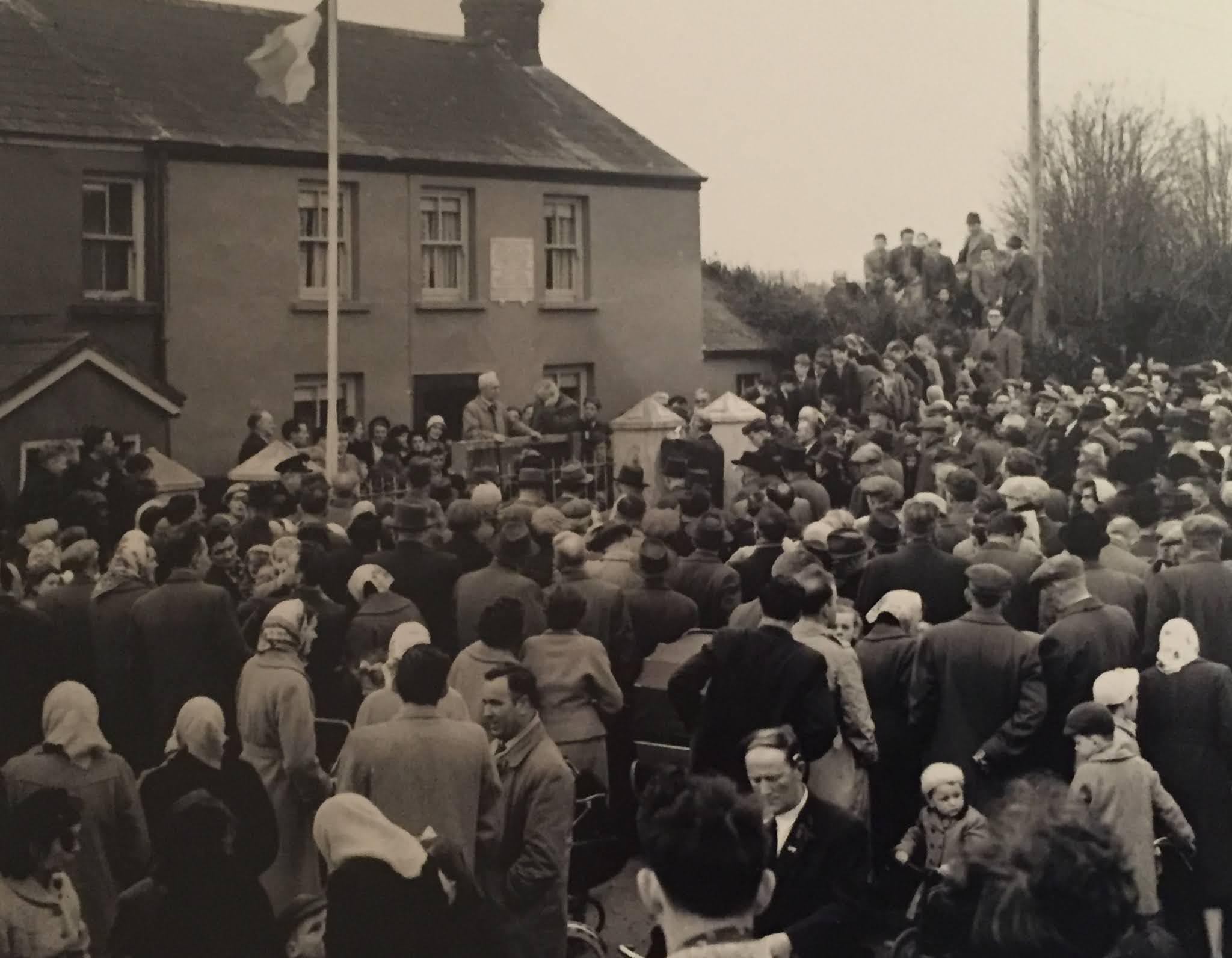
40 years later , John Joe Hegarty would make his final honour to Joe Murphy by arranging for a memorial placue to be placed on his family home and the name of Joe Murphy on the left pillar of the gateway. Many former colleagues turned up for the event including Tom Barry of  Flying Column fame  ; Sean Hegarty ( Brigade Commander No.1 Brigade following Terence McSwiney's death ) , Florrie Donoghue , Tom Croft and surviving members of " H " Comany including John Joe Hegarty who lead the colour party.


Placue Dedication to Joe Murphy
by former members of " H " Company 1960


Placue on wall of Joe Murphy house


Time wore on and in 2019 following intensive research and campaigning by many local groups , Joe Murphy's War of Independence Medal with Bar was finally awarded. This event took place at the City Hall in Cork where Lord Mayor Mick Finn presented the medal to Joe Murphy's Nephew , Harry Delaney. Joe Murphy had to wait 99 years for his Country to finally honour his memory. R.I.P.


Harry Delaney ( Joe Murphy's Nephew ) 
with Medal & Bar 2019
Cork City Hall
 
 
Joe Murphy
War of Independence Medal with Bar


*Acknowledgments:

Shirley Kelleher
Jim Hegarty
W.A. Hill ( Research )

Tuesday, September 1, 2020

Togher Townlands - Introduction

TOGHER , from the Old Irish - An Tóchar - meaning : " Causeway " , consists of 15 Townlands. In ancient times , they were self contained units of land which were created by using natural boundaries such as streams , rocky outcrops and hills. It must be remembered that the terrain was radically different and heavily wooded and not yet shired. This means simply  that fields were not laid out with ditches or hedgerows acting as boundaries , nor were there custom built roads or towns , the ancients living in circular mounds , some of which survive to this day. The original Gaelic settlers used descriptive names for their Townlands based on the topography and terrain to differentiate each division. Initially the Townlands had many diverse titles based on their size or measurement : Gneeve , Sessiagh , Ballyboe , Seisreagh & Ballybetagh. However , following the Norman invasion , the Old English for purposes of simplicity , referred to all as Townlands. The word Townland can be traced back to a mixture of Norse and Norman terminology. The Norse word - Tún and the Norman word - Tun became anglicized as Town ; whilst the word - Land belonged to both the Norse and Norman language and has found its way into the English dictionary. Therefore - TunLand was anglicised to Townland. Indeed , the word Tun , indicates an enclosed Meadow in old Norse and Norman , and is an apt description of the various divisions. The title Toher Meddow is used on the original Down Survey maps of the region and is the first recorded instance of the word by the English. All 15 Townlands would have come under the jurisdiction of the Ui Mc Ceir tribe who had largely died out or had become subsumed by Ostmen and Normans in later centuries. It is probable that some of the original names of the Townlands have also lost their meaning through anglization and some may even have been changed completely or sadly lost to the mists of time.

 
 OSi Map of Togher 19th Century
 
 
The majority of Townlands refer to physical attributes such as hills , bogs/meadows and rocks , while still others remind us of the eventual annexation of Church lands.  Allied to this are Sub-Townlands which may or may not have been original Townlands in their own right or later creations of the Normans - Ashgrove and Pouladuff being 2 such examples. Below are the names of the 15 Townlands of Togher. Note that those marked with an asterisk were either renamed or culled from existing Townlands to form new ones. This would have occurred during the Cromwellian Confiscations in the 17th Century. Of interest is the fact that the cluster of Townlands near the City are quite small with the Southernmost Townlands extending upwards to over a 1000 Acres. It may be the case that the larger Townlands were originally several smaller divisions and the surviving Townland names shorter versions of their parent units. The articles which follow on from this introduction will attempt to flesh out the individual Townlands in terms of geography , topography and local history.


 First draft of Down Survey 17th Century
showing Togher and other regions


Down Survey 17th Century
St. Finbarr's Parish showing Townlands


Ardmanning Beg *
Ardmanning More *
Clashduff
Killeenreendowney ( West )
Freagh & Vicars Acre *
Deanrock*
Lehenagh More 
Lehenagh Beg
Doughcloyne
Chetwynd *
Garrane Darragh
Gortagoulane
Knocknamallavoge
Knockalisheen
Kilmurriheen


Down Survey map of Togher 1650s


Shown above is the first map ever produced of the Togher region! This was drawn by William Petty , Surgeon General of the English Army. Undertaken in the years 1656-1658, the Down Survey of Ireland is the first ever detailed land survey on a national scale anywhere in the world. The survey sought to measure all the land to be forfeited by the native Catholic Irish/Old English in order to facilitate its redistribution to Merchant Adventurers and English soldiers as payment for their services during war. The Townlands were measured in Acres , Roods and Perches and categorized as Pasture or Arable. Bogland was subtracted from the equation which may have been part of several Townlands , so the measurements overall were not exact though close to the mark. It acquired its name from the fact that this was the first time that these territories had been committed to or put " down " on paper. The story of Togher then is the story of its Townlands: The following series will serve as an introduction to each of the 15 Townlands which make up the district of Togher.A brief history and mention of famous personages if any followed by a list of current addresses and historical addresses/structures if any and a detailed explanation of the boundary of the townland with maps and aerial photos both modern and historical. Click on link below to read about the first Townland in our series.


Sunday, August 16, 2020

Local Interviews - 08 - Orla O'Callaghan - Ardmanning Avenue

The Togher Historical Association recently interviewed Orla O'Callaghan who now resides in the State of Maryland , U.S.A. but originally hailed from Ardmanning Avenue. While back home she unearthed her families past to share with the Blog. The story is filled with great tragedy and special memories.


Orla O'Callaghan , Maryland , U.S.A.

Orla's parents married on July 16th 1958 and moved to No.5 Ardmanning Avenue in the mid 1960s. Finbarr Alfred O’Callaghan better known as Barry was a builder/plasterer/roofer by trade and originally hailed from No.68 Blarney Street. He worked on the restoration of the steep roof of St. Vincents Church on Sunday's Well. He went to school with Val O'Connor of O'Connor Funeral Home who was known as " Weeping Jesus " as he could cry on queue. Barry loved his Sweet Afton and a drop of whiskey. Anna Theresa O’Neill known as Theresa ran a clothing manufacturers and drapery business on Grand Parade known as Styline. Her Tailor was Mr. Armstein one of the few Jewish men in Cork at the time. Because of her fashion , she became known as " Lady Ardmanning ". The couple had two children , Victor and Orla who was born in 1966. Both initially attended Togher National School , with Orla transferring to St. Maries of the Isle later on. 


Barry and Theresa's Wedding 1958

Ardmanning Avenue was a privately built Estate which first saw construction in the early 1950s but stalled due to the company going bankrupt with only a few houses being completed. Some locals also attest to lightning striking one of the houses which may have been a harbinger of doom! It wouldn't be until the 1960s when work would resume to complete the Estate , at which time an additional Estate by the name of Ardmanning Lawn was also completed. They were going to buy in Earlwood Estate and then found out that Ardmanning would be a cul-de-sac which would be a safe place for the children to play in. However as building commenced during the 1960s this was not to be.

Styline Drapers headed paper

Hugh and Breda O’Kelly lived across the street. Uncle Hugh was Orla's Godfather and Breda was her Aunt ( her Father's Sister ). Hugh O’Kelly was the vice principal at Christian’s. They moved to Orchard House, Montennotte during the 1970s. Other neighbours at the time were the Cullinanes and the Downeys , a large family ( which included Zita , Pat , Miriam , Barry and Michael ) who lived at No.10. A lifelong friend of Orla's , Cara lived at No.17 with her siblings , Jimmy , Aoife and Nuala. They moved to Old Blackrock Road in the 1980s. Thereafter , Cara traveled the world where she had a fantastic career as an Opera singer. Sadly she passed away in January 2021. Orla recalls her fathers niece Anne who he loved like a daughter. Sadly she passed away at a young age. Orla notes that when her father passed that his old friend Val O'Connor attended to him personally. Over 500 people turned up for his removal. Orla maintains that her father would have loved his own funeral.

Barry O'Callaghan & Victor with cousins at the beach 1960s
 
 
Orlan with brother Victor 1967
 

Christmas 1971 ~ Orla , Victor and Mother


Family photo at Victor's communion
L: Victor and R: Orla


Orla & Victor 1969
in front of number 5 Ardmanning Ave


Orla ( aged 14 ) with Mother and Grandmother 
Rose at No.5 Ardmanning Ave. 1980
 
 
Orla's certificate from Cork Gas Company 1983


Aunt Mai , Orla and Mother in kitchen

Barry O'Callaghan with niece Anne


Orla O'Callaghan , Ursula Cullinane
& Cara O'Sullivan
( ex-Ardmanning Avenue , Togher )
outside White House December 2016


 Theresa O'Callaghan and daughter Orla